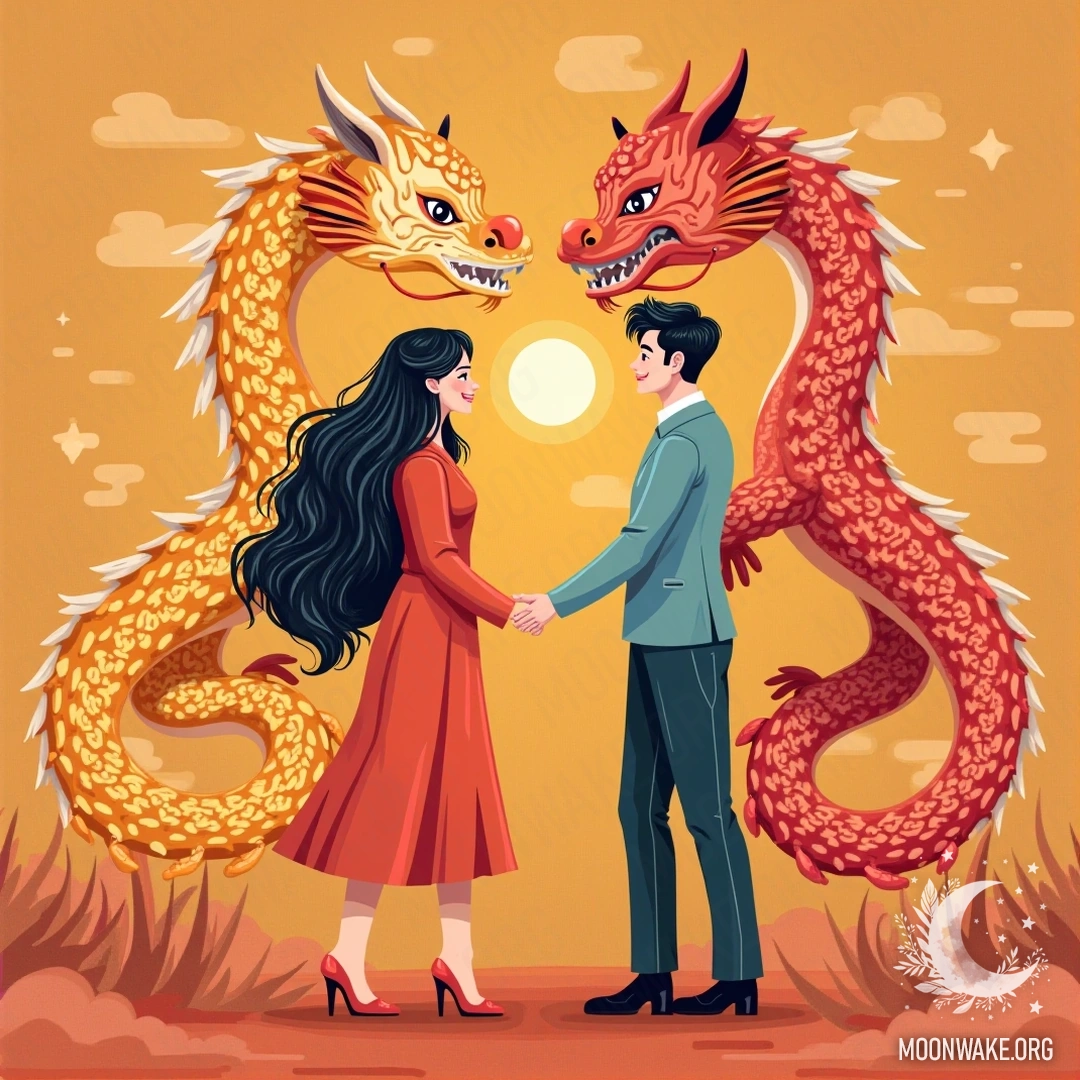
Compatibility in Love: Astrology, Numerology, Esotericism and the Psychological View
Compatibility in Love: Between Science and Intuition
Compatibility in love is the ability of two people to build harmonious, stable, and fulfilling relationships. Often, this means not only similarity of characters but also the level of emotional resonance, similarity of life views, communication styles, and a deep feeling of having found "the right person."
Questions of compatibility have concerned humanity for centuries. Why do some couples feel a strong attraction from the first moments, while others, despite love, cannot get along? What influences the feeling of "chemistry" between two people — genes, psychology, past experience, or the position of the stars?
There are many approaches to evaluating compatibility, which can be roughly divided into two directions:
- Scientific-psychological: based on research in personality psychology, attachment theory, neurobiology, and behavioral compatibility.
- Esoteric: astrology, numerology, Eastern horoscopes, divination systems, and other intuitive-symbolic approaches.
Both approaches have their followers. Some trust exclusively rational data, others rely on intuition, inner signs, and ancient traditions. In practice, most people use a combination of different systems — consciously or not.
In this text, we will consider compatibility in love from different perspectives — psychological and biological to esoteric — to see how various approaches help us better understand ourselves and our partners.
Psychological Compatibility in Love
Psychological compatibility is the degree to which partners emotionally, mentally, and behaviorally suit each other. It is not just about "similarity," but about how well people can listen, understand, and accept each other. Infatuation can be instant, but stable relationships require deep psychological agreement.
1. Personality Types and Temperaments
There are many personality typology systems. Two of the most popular are the temperamental theory (sanguine, choleric, phlegmatic, melancholic) and MBTI (Myers-Briggs Type Indicator). The scientific "Big Five" model is also used to assess compatibility.
| Temperament | Characteristics | Compatibility |
|---|---|---|
| Sanguine | Energetic, sociable, balanced | Easily gets along with phlegmatics and other sanguines |
| Choleric | Impulsive, decisive, quick-tempered | Difficult with melancholics, possible harmony with phlegmatics |
| Phlegmatic | Calm, balanced, slow | Well suited with active types — sanguine or choleric |
| Melancholic | Sensitive, deep, vulnerable | Difficult with cholerics, comfortable with phlegmatics |
For example, according to MBTI, introverts may feel more comfortable with extroverts if there is mutual respect for personal space. Logicians and empaths can complement each other well if they find common ground.
2. Attachment Theory
According to attachment theory (John Bowlby, Mary Ainsworth), each person develops their own style of interaction in close relationships:
- Secure type: trusts, open to intimacy, calmly expresses feelings.
- Anxious: prone to jealousy, fears rejection.
- Avoidant: distances themselves, fears loss of autonomy.
- Disorganized: combines traits of anxious and avoidant types.
The most stable unions often form between people with secure attachment. However, anxious and avoidant types can create "emotional rollercoasters" — intense but unstable relationships.
3. Values, Beliefs, and Goals
Even with excellent emotional compatibility, relationships can face difficulties if partners have very different life views. Key areas include:
- Family priorities (whether they want children, how family roles are distributed).
- Financial attitudes (spending or saving, individual or joint budget).
- Spiritual/religious views.
- Career goals and lifestyle.
Harmony comes when a couple can discuss these differences openly and respectfully — either sharing key values or finding compromises.

4. Emotional Intelligence and Communication
The ability to recognize and express emotions is the foundation of mature relationships. Important components of emotional intelligence include:
- Compassion and empathy.
- Self-regulation and impulse control.
- Flexibility in conflict situations.
- Active listening and nonviolent communication (NVC).
Even with different personalities, a couple with high emotional intelligence can maintain a warm and constructive atmosphere in their relationship.
Biological and Neuropsychological Aspects of Compatibility
Besides psychology, our attraction and choice of partner are influenced by biological and neurophysiological processes. Compatibility on the level of body and brain is not a myth but the result of many factors: hormones, scents, genetics, and activity of certain brain areas.
1. Hormones and Neurotransmitters
Infatuation and love are not only feelings but also chemical reactions. Here are the key substances involved in forming attachment:
| Substance | Role in relationships |
|---|---|
| Dopamine | Pleasure hormone, causes euphoria during infatuation |
| Oxytocin | Hormone of trust and attachment, produced during physical contact |
| Vasopressin | Associated with monogamous behavior and care for partner |
| Serotonin | Regulates mood, associated with obsessive thoughts about the beloved |
2. Genetic Compatibility and Immune System
An amazing fact: we are often attracted to people whose MHC complex differs most from ours — this is a set of genes regulating the immune system. The greater the difference, the potentially healthier the offspring and the stronger the "natural" attraction.
These differences are subconsciously sensed through scent. Studies have shown that people often choose partners whose natural scents they particularly like, even if they do not use perfume.
3. Neurophysiology of Love
In a state of infatuation, certain brain areas are activated, especially the ventral tegmental area (VTA), associated with the reward system. During this period, the activity of areas responsible for critical thinking and risk assessment decreases — which may explain the "rose-colored glasses."
- At the early stage, passion predominates (dopamine, adrenaline).
- After 6–18 months, attachment mechanisms are activated (oxytocin, vasopressin).
- Long-term relationships rely on neural circuits of trust, stability, and emotional support.
Thus, compatibility is not only about "matching personalities" or "aligned horoscopes." It is also a complex biological system in which body and brain actively participate in forming and maintaining a loving bond.
Astrology and Compatibility in Love
Astrology is one of the most popular esoteric approaches for analyzing romantic compatibility. Unlike simple "sign matching," serious astrological analysis considers many factors: the positions of planets at birth, aspects between them, and especially the interaction of two people’s charts, called synastry.
1. Main Planets of Love
In astrology, the following elements are key for analyzing romantic compatibility:
- Sun: life energy, "ego," main personality traits.
- Moon: emotional needs, habits, reaction to stress.
- Venus: love, affection, attachment style, and aesthetics.
- Mars: sexuality, passion, initiative.
- Ascendant: the mask a person "wears" in society, first impression.

When comparing partner charts, astrologers analyze how these elements interact: harmonious aspects (trines, sextiles) indicate easy understanding, while challenging aspects (squares, oppositions) may point to conflicts that can be either destructive or dynamically attractive.
2. Elements and Types of Sign Interactions
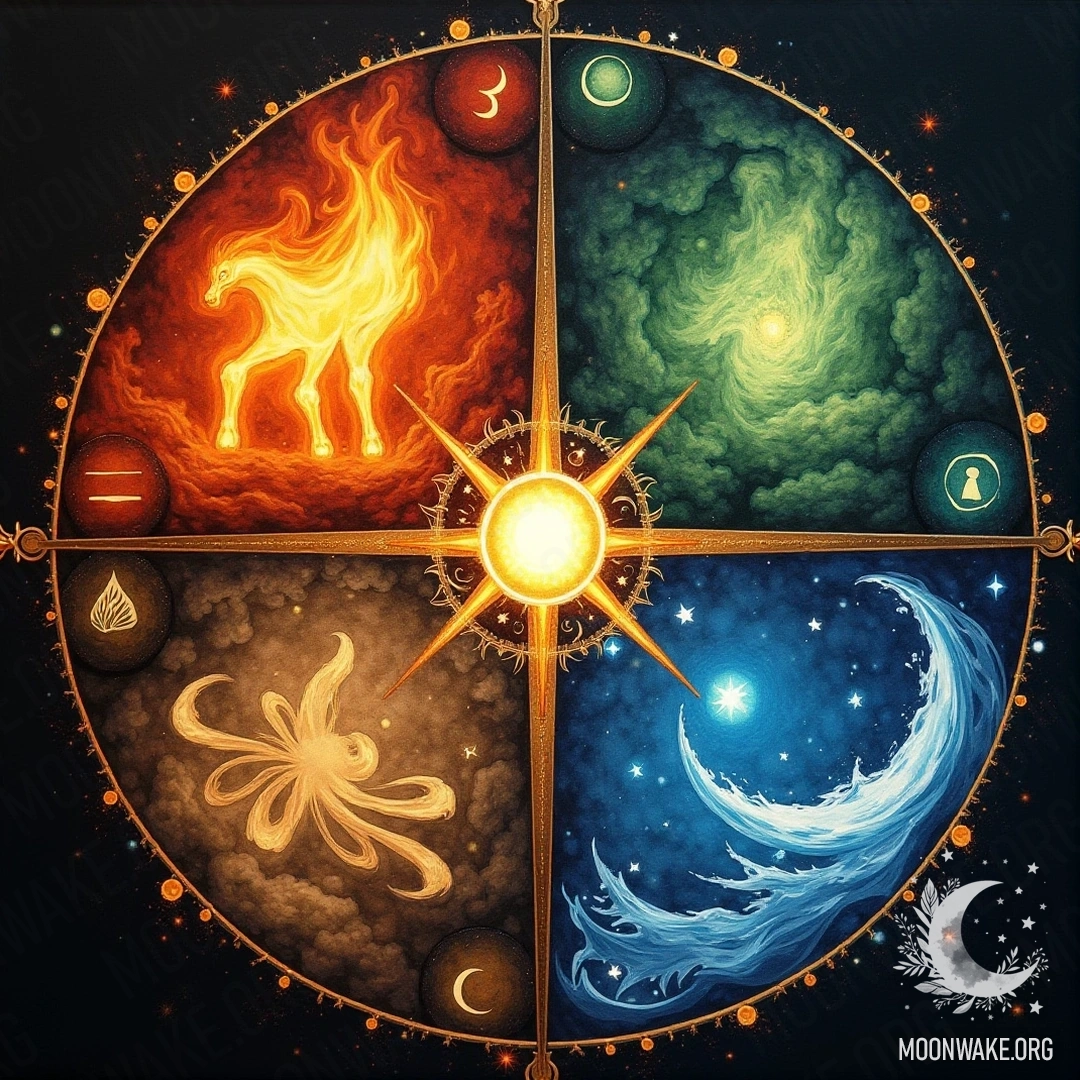
In classical Western astrology, zodiac signs are divided into four elements:
| Element | Signs | Traits | Compatibility |
|---|---|---|---|
| Fire | Aries, Leo, Sagittarius | Activity, passion, impulsiveness | Good with Air and other Fire signs |
| Water | Cancer, Scorpio, Pisces | Sensitivity, intuition, emotionality | Good with Earth and Water signs |
| Air | Gemini, Libra, Aquarius | Communication, logic, independence | Good with Fire and Air signs |
| Earth | Taurus, Virgo, Capricorn | Practicality, stability, realism | Good with Water and Earth signs |
It is believed that elements of the same type (e.g., two Earth signs) find it easier to understand each other, but opposites (e.g., Water and Fire) can create deep passion if they learn to understand their differences.
3. Synastry — Compatibility Chart
Synastry is an astrological method analyzing two natal charts to identify points of harmony and tension. Key elements in synastry include:
- Venus and Mars aspects: passion and physical attraction.
- Moon aspects: emotional compatibility and domestic harmony.
- Conjunctions of personal planets: indicate deep connection.
- Planets in each other’s houses: for example, partner’s Venus in your 7th house indicates possible marriage.
The more positive aspects between charts, the higher the chance of natural harmony in the relationship. However, even challenging aspects can form the basis of passionate and transformative bonds — it depends on the maturity of the partners.
Astrology does not provide absolute guarantees but can help understand why you feel attracted to certain types, where conflicts may arise, and how to consciously work through them.
Numerology and Compatibility in Love
Numerology is an esoteric system according to which numbers related to a person (birth date, name) carry certain vibrations and energy. In relationships, numerology is used to determine compatibility based on the numbers of destiny, character, and life path.
1. Life Path Number
The main number in numerology is the life path number, calculated from the full birth date. It shows the main personality traits, goals, and way of interacting with the world.
Example: for birth date 14.08.1990:
- 1 + 4 + 0 + 8 + 1 + 9 + 9 + 0 = 32 → 3 + 2 = 5
Life path number — 5.
2. Compatibility of Life Path Numbers
Some numbers combine especially harmoniously, others require effort. Below are general tendencies:
| Number | Brief Characteristics | Good Compatibility | Potential Difficulties |
|---|---|---|---|
| 1 | Leader, independent, goal-oriented | 3, 5, 9 | 2, 8 |
| 2 | Gentle, diplomatic, sensitive | 6, 4, 8 | 1, 5 |
| 3 | Creative, sociable, playful | 1, 5, 6 | 4, 7 |
| 4 | Practical, stable, hardworking | 2, 6, 8 | 3, 5 |
| 5 | Adventurous, freedom-loving, energetic | 1, 3, 7 | 4, 6 |
| 6 | Family-oriented, caring, responsible | 2, 3, 4 | 5, 7 |
| 7 | Introverted, spiritual, analytical | 5, 9 | 3, 6 |
| 8 | Ambitious, organized, materialistic | 2, 4 | 1, 9 |
| 9 | Idealistic, compassionate, humanist | 1, 7 | 8 |

3. Other Numerical Indicators
In relationships, you can also consider:
- Soul Urge Number: derived from the vowels in the name — indicates inner desires.
- Expression Number: from all the letters in the name — reflects how a person expresses themselves.
- Destiny Number: the overall life direction and interaction with others.
A comprehensive analysis of all these numbers helps better understand relationship dynamics — where attraction will be, and where challenges may arise.
4. How to Use Numerology in Relationships
Numerology does not condemn: incompatible numbers do not mean doom. They may indicate which issues require more awareness and effort. Simply knowing the differences helps build more mature and respectful relationships.
Other Esoteric Approaches to Compatibility
Besides astrology and numerology, there are many other esoteric systems used to analyze compatibility in love. They offer alternative views on how the energies of two people interact.
1. Human Design
Human Design is a relatively new system combining astrology, I Ching, Kabbalah, chakras, and genetic principles. Based on birth date, time, and place, a "body graph" is created, accounting for centers (chakras), type, strategy, and authority.
- Types: manifestor, generator, manifesting generator, projector, reflector.
- Strategy: how best to interact with others.
- Compatibility: analyzed by matching/differing activated centers and channels.
In relationships, attention is often paid to how one partner influences the other's "energy map" — enhancing, filling, or overloading it.
2. Vedic Astrology (Jyotish)
In the Eastern (Indian) astrological tradition, special attention is given to kundali compatibility — matching birth charts of partners across 36 parameters (gunas). The most important include:
- Nakshatras: lunar constellations determining the emotional rhythm of the person.
- Mangal Dosha: influence of Mars; can cause tension if not balanced in both partners.
- Moon Position: considered even more important than the Sun — reflects the mind and feelings.
Vedic astrology carefully assesses chances for a happy marriage, including spiritual, physical, and material compatibility.
3. Chinese Metaphysics
Several approaches are used in Chinese tradition:
Bazi (Four Pillars of Destiny)
A system based on birth date and time, where a person is represented by 8 characters (heavenly stems and earthly branches). It analyzes Yin and Yang elements, interactions of the five elements (Fire, Earth, Metal, Water, Wood).
- Compatibility is considered through the balance of partners’ elements.
- Harmony of heavenly stems and earthly branches is also important.
Chinese Zodiac
A simpler system — the Chinese horoscope based on the birth year (12 animals). Examples of classic pairings:
| Sign | Best Partners | Challenging Matches |
|---|---|---|
| Rat | Dragon, Monkey, Ox | Horse, Goat |
| Tiger | Dog, Horse, Pig | Monkey, Snake |
| Snake | Rooster, Ox | Pig, Tiger |
| Rabbit | Sheep, Pig, Dog | Rooster, Dragon |
Though often seen as a simplified system, the Eastern calendar can indicate the natural dynamics between personalities.
4. Kabbalah and Name Compatibility
In the Kabbalistic tradition, a name carries a specific spiritual vibration. Compatibility can be determined by matching numerical values of names, as well as analyzing soul archetypes (types of ticks and levels of consciousness).
Such systems may seem esoteric or metaphorical, but for many, they become tools for self-discovery and seeking deep resonant connection with another person.
Conscious Approach: How to Work with Incompatibility
No system—be it astrology, psychology, or numerology—can predict with absolute certainty the success or failure of a relationship. Compatibility is not a verdict but a direction for conscious work. Even if charts, numbers, or tests "don’t match," it does not mean love is impossible.
1. Understanding Differences is Key to Growth
- Different temperaments: one person may be an introvert, the other an extrovert. This is not a conflict but a growth area.
- Divergent values: instead of fighting for the "right" opinion, it is better to find common ground.
- Different ways of expressing feelings: understanding love languages helps reduce mutual hurt feelings.
Recognizing these differences allows you to see them not as threats but as opportunities to deepen mutual understanding.
2. Emotional Intelligence and Maturity
Compatibility can grow over the years if both partners develop. Key qualities that help overcome mismatches include:
- The ability to listen without judgment
- The ability to admit mistakes and change
- Willingness for honest dialogue
- Compassion and respect for the other’s feelings
3. Psychotherapeutic Perspective
From the point of view of modern psychology, conflicts are not a sign of "incompatibility," but a natural part of any close relationship. What matters is not the presence of differences but how they are handled.
Practices that really help include:
- Couples therapy: helps identify the deep causes of conflicts.
- Nonviolent communication method: teaches expressing feelings without blame.
- Family constellations, Gestalt, and body therapy: help to better understand unconscious patterns in partner choice.
4. When Incompatibility is Truly Critical
There are situations when differences become insurmountable—especially if one partner refuses to change or ignores the other’s boundaries. Examples include:
- Fundamental value conflicts (e.g., desire or lack thereof for children)
- Violence, abuse, systematic criticism
- Lack of respect for personal space, goals, and dreams of the partner
In such cases, it is important not to "endure for love," but to make mature decisions for one’s own well-being.
5. Conclusion: Compatibility as a Process
Compatibility is not a given but a process. Even people with a "perfect horoscope" may part ways if they ignore each other. And even very different people according to any system can create a deep and happy connection if there is:
- Empathy
- Mutual willingness to invest
- Openness to growth

Conscious relationships start with self-understanding—thus, studying compatibility systems can be seen not as an instruction but as a mirror reflecting our fears, desires, and readiness for love.